Thank you! Your submission has been received!
Oops! Something went wrong while submitting the form.
.webp)

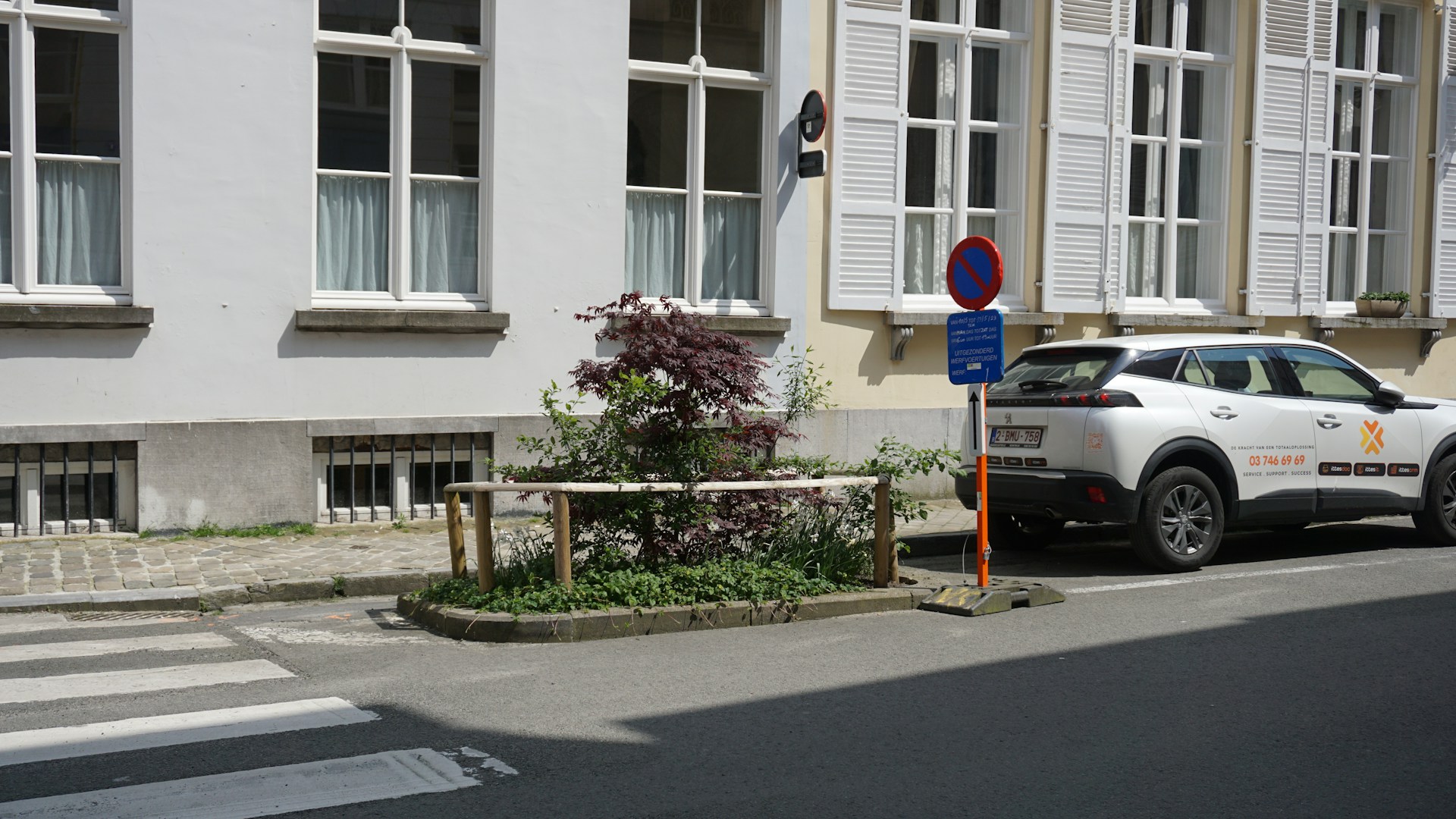

Easily find and reserve your parking space near
As soon as the temperatures rise, Bruges will become one of the most popular destinations for an extended weekend in Flanders. Easter, Ascension, Pentecost and May 1 are classics: a few days away, a hotel or B&B in the city center, walking along the canals, visiting museums and eating extensively in the evening.
In practice, this usually also involves a car. Many visitors arrive on Friday evening or Saturday afternoon, park in a central car park and leave the car parked for the rest of the weekend. This is comfortable, but also ensures that garages and street car parks fill up quickly. Those who arrive later often have less choice and have to park a little further from the center.
In this guide, we'll look at how those long weekends in Bruges work, what that means for parking, and how best to plan your car if you stay two or three nights — with SparkSpot as an option for those who want to reserve a fixed spot in advance.
Bruges is popular all year round, but the real peak usually starts in the spring. As soon as the terraces open and the sun shines more often, the city trips start. The holidays work like a natural magnet:
- At Easter, families and couples love to head to the city for a first spring weekend
- Bridge days are often taken around 1 May and Ascension Day, ideal for three or four days of Bruges
- during Pentecost, people like to combine a cultural visit with quiet dining and walking
In some years, this still includes major events, such as the Holy Blood Procession on Ascension, a marathon or festival. This means extra visitors, but also additional traffic measures and fewer available parking spaces near the city center.
You can quickly see the typical pattern: people book an overnight stay a few months in advance, then decide to come by car, and only then start thinking about where that car can actually stay for an entire weekend.
On a typical weekday, Bruges has quite a bit of slack: there is more rotation in the car parks, and day visitors alternate during the day. During extended weekends, the behavior is different.
Friday evening is the first turning point. Many guests come to Bruges after work and drive directly to an underground car park or to the station. They park, take their luggage and head to their hotel. The car then often stays there for two or three nights.
On a Saturday afternoon, you have a second wave: day tourists coming to visit the city, plus additional overnight guests who only arrive then. The result is that central car parks and popular street zones around the city center are often almost full during those periods. Because fewer cars are leaving, there is less traffic: the seats that have been taken will remain so.
If you arrive just before check-in or dinner, you'll notice the difference. You'll have to look longer or swerve to car parks further away or to car parks near the station and around the edge. The city itself remains equally charming, but your starting point is just a little further from the hotel than you might have hoped for.
Every extended weekend has its own dynamics, but the common thread is the same: more visitors, more nights and higher parking pressure.
At Easter, you often see families and international visitors who combine Bruges with other cities in Belgium. The car then becomes a kind of base for a mini road trip. Parking spaces close to the center are interesting, but are also quickly claimed by overnight guests.
Around 1 May, couples and groups of friends are more likely to plan a short stay in Bruges. Terraces, city walks and possibly a trip to the coast fill the agenda. Most cars arrive on Friday or the evening before the holiday and then disappear into a car park for two nights.
Ascension and Pentecost often coincide with other activities. In Bruges, Ascension Day is traditionally strongly linked to the Holy Blood Procession, which brings thousands of visitors to the city. If that procession coincides with a long weekend, the effect is double: extra day tourists and overnight stays who prefer to be close to the center. Pentecost often falls during a period of other events or cultural activities, which again attracts additional people.
In all these cases, it is rarely a good idea to “see where there is still room” just before arrival. Those who plan their parking as carefully as they plan their hotel are usually much more comfortable.
Once you have arrived in Bruges, you will usually no longer need the car until you drive back home. The city center is compact and easy to walk. By bike, bus or taxi, you can easily get where you need to be. This means that, in practice, your car will simply stand still for a few days.
This has two consequences:
You'd rather not puzzle over where you can be today, or for how long, every day. Having a fixed spot for your entire stay is easier.
The exact location of your car park is less important than you think, as long as it's within a logical walking distance of your stay and you can easily get there upon arrival.
A classic solution is a daily or multi-day ticket in a public garage. This often works great, but has a few practical caveats:
- you are dependent on available seats when you arrive
- at peak times (Friday evening, Saturday afternoon), a garage can be full
- if your hotel does not have its own parking, the walk with luggage can be quite long
So if you have the choice, it makes more sense to book a spot in advance and build your stay from there.
SparkSpot responds to exactly that point. Instead of betting on a free space in a busy garage, book a private car park in Bruges in advance. This can be a private driveway, a car park at a company or a small closed car park owned by a trader.
Via the map on SparkSpot, you can see:
- in which districts in and around Bruges there are places available
- how far you are on foot from the city center or from your hotel
- what time blocks and rates apply
You simply choose the dates of your stay — for example, from Friday evening to Monday morning — and reserve one fixed spot for the entire weekend. The owner will provide you with clear information about access, any badges or codes and practical guidelines.
For longer weekends around Easter, Ascension, Pentecost or 1 May, this provides concrete benefits:
You no longer have to hope that there is “just one more space available” in a public garage when you arrive.
You can fully tailor your route and arrival time to your own schedule, without having to take into account peak times in car parks.
Your car is parked in a place that you have chosen in advance and whose address you know, often on a logical walking route to your accommodation.
You pay for a reserved service, not with extra time spent driving around in heavy traffic.
A few simple choices make a big difference.
Preferably plan your arrival outside the absolute peak. That means: not right after noon on a sunny Saturday on an extended weekend, if that is at all avoidable. Arriving later on Thursday evening or earlier on Friday often gives more breathing space, both on the road and in the city.
Check in advance where you're staying and how far you're willing to walk with luggage. A car park on the outskirts of the city with a pleasant walking route to your stay is sometimes a better choice than a busy garage right in the center.
Make sure you first secure your parking space upon arrival, and only then check in or head into town. If you book via SparkSpot, that first part has already been arranged; you drive directly to the reserved address, park and leave on foot.
Finally, see parking as an integral part of your city trip planning. Just like you're no longer looking for a “lucky” hotel once you arrive in Bruges, it makes sense to arrange your parking in advance. Especially on longer weekends, you'll save yourself a lot of unnecessary searching.
On most long weekends, Friday nights and Saturday afternoons are the busiest. Then most guests arrive by car, often in a relatively short period of time. Central car parks and popular street zones then fill up quickly. Those who arrive earlier in the day, or later in the evening, usually have more choice.
That is possible, but in practice, this is not a certainty on busy extended weekends. Especially when the weather is nice and when there is an extra event in the city, underground garages are often almost full. In that case, you will be directed to car parks near the station or to peripheral locations. With a pre-reserved parking space via SparkSpot, you can avoid that uncertainty.
This often happens in Bruges, especially in the historic core. You then have three options: find a public garage within walking distance, park at the station and take a walk or take public transport, or book a private parking in advance via SparkSpot near your stay. The latter option gives you the most control over distance and availability.
For longer stays, one fixed place is usually the quietest solution. You park your car upon arrival and only pick it up when you leave. A Sparkspot car park is then a good choice: you pay for the period you need and don't have to worry about moving around or vacant spaces for the rest of the weekend.
That depends on the type of parking solution you choose. In public zones, there are often time limits and you must extend your ticket or parking session. With a private car park reserved via SparkSpot, you can record the entire period when booking. You then don't have to make any changes during your stay and can leave your car undisturbed until the time of departure.
Find parking nearby, reserve in 3 minutes and walk leisurely to the stadium.



In 3 simple steps, you can be sure of your parking space at Club Brugge.your event.

Find the right day via the match calendar.

Compare price, distance and type of parking space.

Your route and access are in your inbox.
Still unsure about how it works or what happens after your reservation? Here are the answers to the most frequently asked questions about parking via SparkSpot.
Some parking spaces via SparkSpot are equipped with charging stations. Use the “EV charger” filter when you search to find such places.
Yes. If your booking hasn't started yet, you can cancel free of charge up to 48 hours before arrival.
Yes, at SparkSpot, we offer flexibility while ensuring clarity when it comes to cancellations.
Our policy is as follows:
No, a separate app is not necessary. You can easily book via the website and get all the necessary details in your email.
Yes, you can register an account with an email and password for free so you can make, manage reservations and access your booking history.
No, placing your parking space is completely free. You only pay a commission when a booking is made via SparkSpot.
If you are delayed, please contact us as soon as possible. We'll try to support you, but we can't guarantee extra time on top of your booked slot.
We work with real-time availability. If the spot is unexpectedly unavailable, we'll help you find an alternative or arrange a full refund.
You pay directly online when booking via a secure payment system. The owner receives payment after the booking meets the conditions.
.jpg)




.webp)
